Narrative, full-body experiences in a CAVE that teach children and teenagers how AI systems learn, make mistakes and depend on human decisions.

Challenge
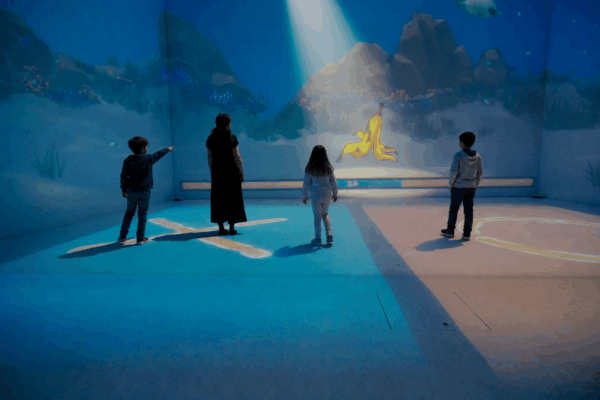
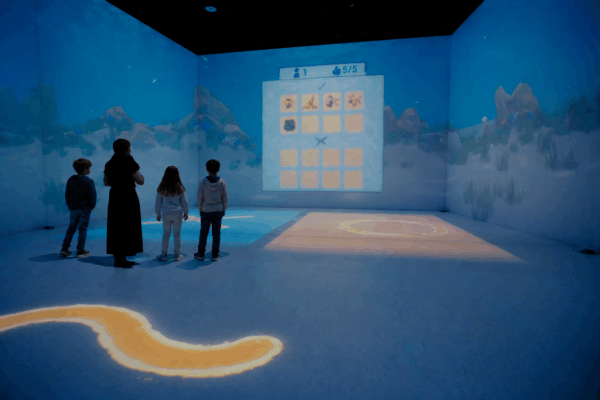
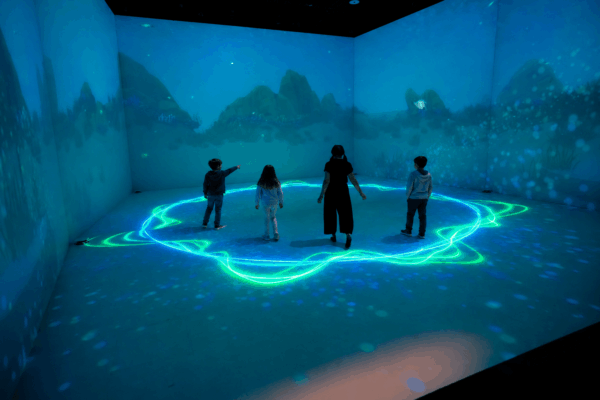
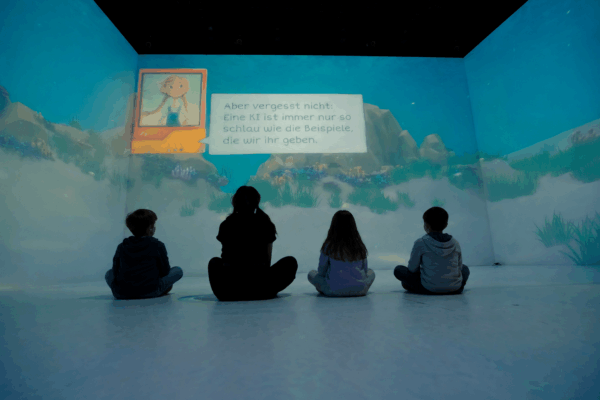
AI is already part of children’s everyday lives, from voice assistants to chatbots, yet how these systems learn usually stays invisible. Concepts such as training data, classification, bias and consent are abstract, and they’re hard to convey to children and teens through slides and worksheets alone. In the Decoding AI project, we asked how young learners could experience the way an AI system is built, rather than just hear about it. The setting is the X Reality Lab at Universität Mozarteum: a 165 m² CAVE whose five walls and floor become one immersive, movement-tracked space.

Solution
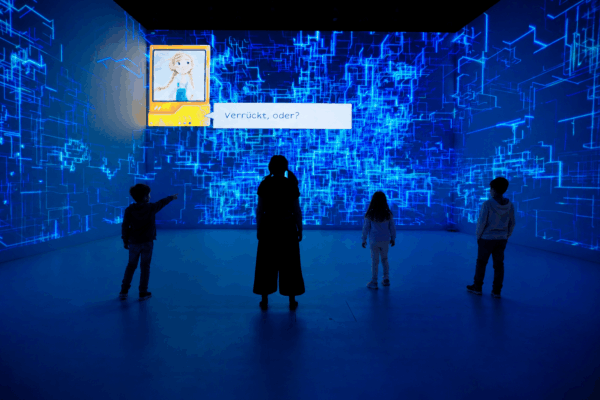
Our role in the project was to design and develop two narrative scenarios for the CAVE, one for children aged 9–10 and one for teenagers aged 13–14. Both are guided by Kimi, a girl who lives in a lighthouse by the sea and spends her days close to the ocean. Kimi is designed as a peer rather than a teacher, matching the students’ ages. She learns alongside the students as they take on a shared mission: teaching Ocean Sweep, an AI-powered ocean cleaner, what belongs in the sea.
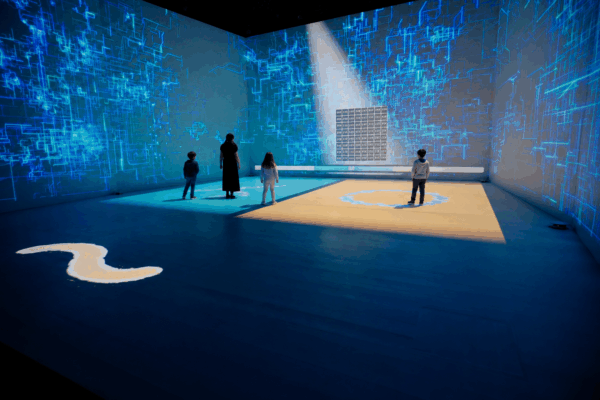
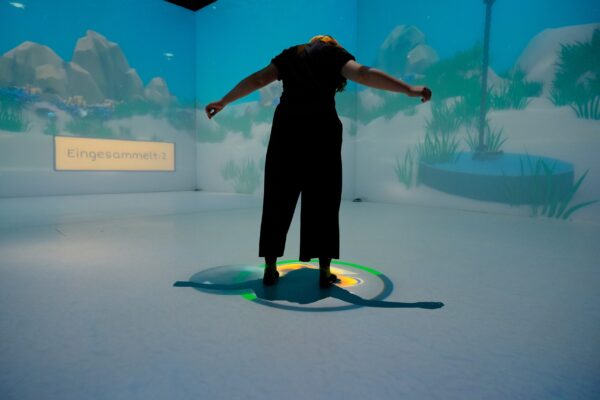
To make the best use of the X Reality Lab capabilities, the interaction is entirely movement-based. Students vote by stepping into Yes and No zones, and they collect training data by walking across the projected sea floor. Students also travel into an abstract data world to see how the AI decodes images into numbers. Along the way, they make critical decisions, such as choosing datasets and giving Ocea Sweep feedback. As part of the design of the experience, we created the characters, narrative, and implemented the experiences in Unreal Engine making use of MOZ-XR, the X Reality Lab custom framework. We also created the project’s visual identity and design of the accompanying learning materials for teachers and students.

Results
The scenarios are being tested with school classes from both age groups, including both how students experience the narrative, as well as learning effects.
Partners